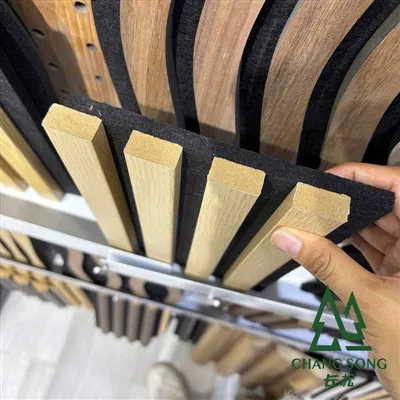
As a supplier of Acoustic Panel Wall, I've often been asked about how our products handle ultrasonic noise. Ultrasonic noise, which refers to sound waves with frequencies above the upper audible limit of human hearing (typically around 20,000 Hz), can pose unique challenges in various environments. In this blog, I'll delve into the science behind how acoustic panel walls deal with this type of noise and explain why our Acoustic Panel Wall is an effective solution.
Understanding Ultrasonic Noise
Before we discuss how acoustic panel walls handle ultrasonic noise, it's important to understand what ultrasonic noise is and where it comes from. Ultrasonic noise can be generated by a variety of sources, including industrial machinery, medical equipment, and some electronic devices. In industrial settings, for example, high - speed machinery such as turbines, compressors, and ultrasonic cleaning equipment can produce significant amounts of ultrasonic noise. In medical facilities, ultrasound imaging devices and certain surgical tools also emit ultrasonic frequencies.
The presence of ultrasonic noise can have several negative impacts. Although humans cannot directly hear ultrasonic noise, it can still cause discomfort, stress, and even potential long - term health effects in some cases. Additionally, in industrial environments, ultrasonic noise can interfere with sensitive equipment and cause malfunctions. Therefore, controlling ultrasonic noise is crucial for both human well - being and the proper functioning of equipment.
How Acoustic Panel Walls Work
Acoustic panel walls are designed to absorb, reflect, and dampen sound waves. The basic principle behind their operation is to convert sound energy into heat energy through a process called sound absorption. When a sound wave hits an acoustic panel wall, it causes the fibers or particles within the panel to vibrate. These vibrations generate friction, which in turn converts the sound energy into heat.
The effectiveness of an acoustic panel wall in handling sound depends on several factors, including its material composition, thickness, density, and surface texture. Different materials have different acoustic properties, and they can be tailored to absorb specific frequencies of sound. For ultrasonic noise, the key is to select materials and designs that are optimized for high - frequency absorption.
Materials for Ultrasonic Noise Absorption
One of the materials commonly used in our acoustic panel walls is the MDF Acoustic Panel. Medium - density fiberboard (MDF) has several properties that make it suitable for acoustic applications. MDF is a composite material made from wood fibers bonded together with resin under high pressure and temperature. It has a relatively uniform density and a smooth surface, which can be beneficial for sound absorption.
In addition to MDF, other materials such as fiberglass, mineral wool, and open - cell foam are also used in acoustic panel walls. Fiberglass and mineral wool are excellent sound absorbers because they have a large number of tiny air pockets that can trap sound waves. Open - cell foam, on the other hand, has a porous structure that allows sound waves to penetrate and be absorbed.
For ultrasonic noise, materials with a fine - pore structure are particularly effective. The small pores in these materials can interact with the high - frequency ultrasonic waves, causing them to be absorbed more efficiently. Our acoustic panel walls are often constructed with a combination of these materials to achieve optimal absorption across a wide range of frequencies, including ultrasonic frequencies.
Design Considerations for Ultrasonic Noise
The design of an acoustic panel wall also plays a crucial role in handling ultrasonic noise. The thickness of the panel is an important factor. Generally, thicker panels are more effective at absorbing lower frequencies, but they can also have an impact on high - frequency absorption. For ultrasonic noise, a panel with an appropriate thickness needs to be selected to ensure that it can effectively interact with the high - frequency waves.
The surface texture of the panel can also affect its acoustic performance. A rough or textured surface can increase the surface area available for sound absorption, which can be beneficial for ultrasonic noise. Our acoustic panel walls are often designed with a textured surface to enhance their high - frequency absorption capabilities.
Another design consideration is the installation method. Acoustic panel walls can be installed in different ways, such as directly on the wall, using a suspension system, or in a modular configuration. The installation method can affect the way sound waves interact with the panels and the overall acoustic performance of the system. For ultrasonic noise control, a proper installation method needs to be chosen to ensure that the panels are positioned correctly and that there are no gaps or air leaks that could allow sound to escape.
Testing and Certification
As a responsible supplier of acoustic panel walls, we conduct extensive testing to ensure that our products meet the highest standards of acoustic performance. Our acoustic panel walls are tested in accredited laboratories using industry - standard methods. These tests measure the sound absorption coefficient of the panels at different frequencies, including ultrasonic frequencies.
We also obtain relevant certifications for our products, which provide independent verification of their acoustic performance. These certifications give our customers confidence that our acoustic panel walls are effective in handling ultrasonic noise and other types of sound.
Real - World Applications
Our acoustic panel walls have been successfully used in a variety of real - world applications to control ultrasonic noise. In industrial factories, our panels have been installed in areas where high - speed machinery is located to reduce the levels of ultrasonic noise. This not only improves the working environment for employees but also helps to protect sensitive equipment from the negative effects of ultrasonic interference.
In medical facilities, our acoustic panel walls have been used in ultrasound rooms and surgical suites to minimize the spread of ultrasonic noise. This helps to create a more comfortable and quiet environment for patients and medical staff.
Conclusion
In conclusion, acoustic panel walls are an effective solution for handling ultrasonic noise. Through the use of appropriate materials, designs, and installation methods, our Acoustic Panel Wall can effectively absorb, reflect, and dampen ultrasonic waves. Our commitment to quality, testing, and certification ensures that our products meet the highest standards of acoustic performance.
If you are facing challenges with ultrasonic noise in your facility, we invite you to contact us for a consultation. Our team of experts can help you select the right acoustic panel wall solution for your specific needs and provide you with professional installation and after - sales service. Let us work together to create a quieter and more comfortable environment.


References
- Beranek, Leo L. "Acoustics." American Institute of Physics, 1954.
- Kinsler, Lawrence E., et al. "Fundamentals of Acoustics." John Wiley & Sons, 2000.
- ISO 354:2003. "Acoustics - Measurement of sound absorption in a reverberation room." International Organization for Standardization.