In industrial settings and workplaces filled with a multitude of machinery, the issue of noise pollution is a significant concern. Excessive noise not only affects the well - being and productivity of workers but can also lead to long - term health problems such as hearing loss. One effective solution to combat this problem is the use of acoustic panel walls. As a supplier of Acoustic Panel Wall, I am well - versed in the performance of these panels in rooms with high - level machinery noise.
Understanding Machinery Noise
Machinery noise is a complex combination of different frequencies and amplitudes. It can be classified into two main types: broadband noise and tonal noise. Broadband noise contains a wide range of frequencies and is often associated with processes like grinding, cutting, and ventilation. Tonal noise, on the other hand, is characterized by a dominant frequency or a set of frequencies and is commonly produced by rotating machinery such as motors and fans.

The intensity of machinery noise is typically measured in decibels (dB). In industrial environments, noise levels can easily exceed 85 dB, which is the maximum recommended exposure level for an 8 - hour workday according to many safety standards. Prolonged exposure to such high - level noise can cause irreversible damage to the human ear.
How Acoustic Panel Walls Work
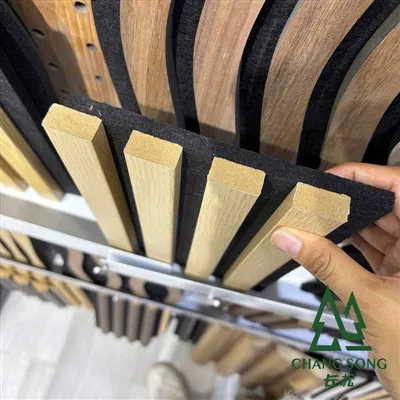
Acoustic panel walls are designed to absorb sound energy. They are made of various materials, each with different acoustic properties. One popular type is the MDF Acoustic Panel. Medium - density fiberboard (MDF) is a common base material, which can be combined with other sound - absorbing materials like fiberglass or mineral wool.
When sound waves hit an acoustic panel wall, they enter the porous structure of the panel. The sound energy is then converted into heat energy through a process called viscous dissipation. The pores and fibers within the panel cause the air molecules in the sound wave to vibrate, and these vibrations are then dampened, reducing the intensity of the reflected sound.
Performance in Rooms with Machinery Noise
Absorption of Broadband Noise
Acoustic panel walls are highly effective in absorbing broadband noise. The porous structure of the panels can capture a wide range of frequencies, from low - frequency rumbles to high - frequency screeches. For example, in a metal - working shop where there are multiple machines generating broadband noise, installing acoustic panel walls can significantly reduce the overall noise level.
The absorption coefficient is a key parameter to measure the performance of acoustic panels. It ranges from 0 to 1, where 0 means no absorption and 1 means complete absorption. High - quality acoustic panel walls can have an absorption coefficient of 0.8 or higher across a broad frequency range, which means they can absorb a large portion of the incident sound energy.
Reduction of Tonal Noise
Tonal noise can be more challenging to deal with, but acoustic panel walls can still play an important role. By carefully selecting the material and thickness of the panels, it is possible to target specific frequencies. For instance, in a room with a dominant tonal noise from a large motor, panels with a specific resonance frequency can be used to absorb the energy of that particular frequency.
In addition to direct absorption, acoustic panel walls can also help to break up standing waves in the room. Standing waves are formed when sound waves reflect back and forth between parallel walls, creating areas of high and low sound pressure. These standing waves can cause uneven sound distribution and make the noise seem more intense. Acoustic panel walls disrupt the formation of standing waves by absorbing and scattering the sound waves, resulting in a more uniform sound field.
Reverberation Time Reduction
Reverberation time is the time it takes for the sound in a room to decay by 60 dB after the source has stopped. In a room full of machinery, a long reverberation time can make the noise seem louder and more annoying. Acoustic panel walls can significantly reduce the reverberation time.
By absorbing the sound energy, the panels prevent the sound from bouncing around the room for an extended period. A shorter reverberation time not only makes the room quieter but also improves speech intelligibility. In an industrial environment, this is crucial for communication between workers, which in turn enhances safety and productivity.
Factors Affecting Performance
Panel Placement
The placement of acoustic panel walls is crucial for their performance. In a room with machinery noise, it is recommended to install the panels on the walls and ceilings where the sound reflection is the most significant. For example, in a rectangular room, the panels should be placed on the long walls and the ceiling to maximize the absorption of sound waves.
Panel Density and Thickness
The density and thickness of the acoustic panels also affect their performance. Generally, thicker panels can absorb lower frequencies more effectively. However, the density of the panel needs to be balanced. A panel that is too dense may reflect more sound, while a panel that is too porous may not provide enough structural integrity.
Room Geometry
The geometry of the room plays a role in the performance of acoustic panel walls. Irregularly shaped rooms can be more challenging to treat, as the sound waves can reflect in unpredictable ways. In such cases, a more strategic placement of the panels may be required, or additional acoustic treatments may be necessary.
Real - World Applications
Many industries have successfully used acoustic panel walls to reduce machinery noise. In the automotive manufacturing industry, where there are various machines such as stamping presses, welding machines, and assembly line conveyors, acoustic panel walls have been installed in production areas. This has not only improved the working environment for employees but also reduced noise complaints from neighboring areas.
In the food processing industry, where there are high - speed mixers, blenders, and refrigeration units, acoustic panel walls have been used to control the noise level. The reduction in noise has helped to meet occupational health and safety standards and has also improved the quality of the final products by reducing the vibration and noise - related disturbances.
Conclusion
Acoustic panel walls are a highly effective solution for reducing machinery noise in rooms. They can absorb both broadband and tonal noise, reduce reverberation time, and improve the overall acoustic environment. As a supplier of Acoustic Panel Wall, I have seen firsthand the positive impact these panels can have in industrial settings.
If you are facing problems with machinery noise in your workplace, I encourage you to consider using acoustic panel walls. We offer a wide range of acoustic panel products, including MDF Acoustic Panel, to meet your specific needs. Contact us to discuss your requirements and start the process of creating a quieter and more productive environment.
References
Beranek, Leo L. "Acoustics." American Institute of Physics, 1954.
Kuttruff, Heinrich. "Room Acoustics." Spon Press, 2009.
ISO 3382 - 1:2009, "Acoustics - Measurement of room acoustic parameters - Part 1: Performance spaces."