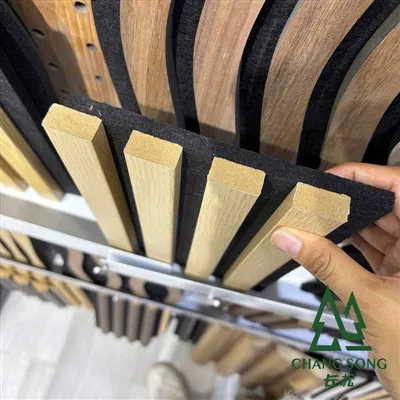
Hey there! I'm a supplier of Ash Faced Plywood, and I often get asked about how to calculate the load - bearing capacity of this awesome product. In this blog, I'm gonna break it down for you in a way that's easy to understand.
First off, let's talk about what load - bearing capacity means. Simply put, it's the maximum amount of weight or force that the Ash Faced Plywood can handle without breaking or deforming in a way that makes it unusable. There are a bunch of factors that come into play when calculating this capacity.
1. Plywood Thickness
One of the most important factors is the thickness of the plywood. Generally speaking, the thicker the Ash Faced Plywood, the higher its load - bearing capacity. For example, a 12mm thick piece of Ash Faced Plywood will be able to support less weight compared to a 18mm thick one.
Let's say you're using the plywood for a shelf. A thinner plywood might work for storing light - weight items like books or small decorative pieces. But if you plan to put heavy tools or large appliances on it, you'll definitely want a thicker plywood.
2. Grade of the Plywood
The grade of the Ash Faced Plywood also matters a lot. Higher - grade plywood is made with better quality veneers and adhesives. This means it's more likely to have a higher load - bearing capacity.
There are different grading systems out there, but in general, a grade A plywood will be of better quality than a grade C. Grade A has fewer knots and defects, which makes it stronger and more reliable when it comes to bearing loads.
3. Span Length
The span length is the distance between the supports of the plywood. The longer the span, the less load the plywood can handle. For instance, if you have a piece of plywood spanning across two beams that are far apart, it will bend more under a load compared to a shorter span.
To calculate the load - bearing capacity based on span length, you can use some engineering formulas. A common one is the formula for a simply supported beam. But if math isn't your thing, there are also load - bearing capacity charts available online. These charts give you an idea of how much weight a particular thickness and grade of Ash Faced Plywood can support at different span lengths.
4. Type of Load
The type of load also affects the load - bearing capacity. There are two main types: static loads and dynamic loads.
Static loads are the ones that don't move, like the weight of a bookshelf and the books on it. Dynamic loads, on the other hand, are loads that change over time, like people walking on a floor made of plywood. Dynamic loads are usually more demanding on the plywood because they create vibrations and sudden impacts.
When calculating the load - bearing capacity, you need to consider the worst - case scenario. If you expect dynamic loads, you'll need to choose a plywood that can handle the extra stress.
Calculation Example
Let's go through a simple example of calculating the load - bearing capacity. Suppose you have a 15mm thick Ash Faced Plywood with a grade B. The span length between the supports is 1.2 meters, and you're using it for a static load (like a storage shelf).
First, you can refer to a load - bearing capacity chart. Let's say the chart tells you that for a 15mm grade B Ash Faced Plywood with a 1.2 - meter span, it can support a maximum static load of 200 kilograms per square meter.
If your shelf has an area of 2 square meters, then the total load it can support is 200 kg/m² × 2 m² = 400 kilograms.
Other Considerations
It's also important to think about the environment where the plywood will be used. If it's in a humid or wet area, the plywood might lose some of its strength over time. In such cases, you might want to choose a plywood that's treated to resist moisture.
Another thing to keep in mind is the way the plywood is installed. Proper installation, including using the right fasteners and making sure the supports are stable, can significantly improve the load - bearing capacity.
Related Products
If you're interested in other types of faced plywood, we also offer Sapeli Faced Plywood, Natural Teak Faced Plywood, and Black Walnut Faced Plywood 18mm. Each of these has its own unique characteristics and load - bearing capacities.


Conclusion
Calculating the load - bearing capacity of Ash Faced Plywood isn't rocket science, but it does require considering several factors like thickness, grade, span length, and type of load. By taking these factors into account, you can make sure you're using the right plywood for your project.
If you're in the market for Ash Faced Plywood or any of our other products, I'd love to talk to you. Whether you're a contractor working on a big project or a DIY enthusiast, we can help you find the perfect plywood for your needs. Just reach out, and we can start a conversation about your requirements and how we can assist you.
References
- Wood Handbook: Wood as an Engineering Material, Forest Products Laboratory
- Plywood Design Specification, American Plywood Association