Introduction to Green Film Faced Plywood
In today's construction industry, material selection plays a crucial role in project quality, efficiency, and sustainability. Green film faced plywood has become a preferred solution for concrete formwork and structural applications thanks to its excellent water resistance, durability, and environmentally friendly options.
Widely used in infrastructure projects, high-rise buildings, and industrial construction, green film faced plywood delivers consistent performance while supporting modern green building standards.

⸻
What Is Green Film Faced Plywood?
Green film faced plywood is a type of engineered plywood panel coated with a green phenolic or melamine film on both sides. This film acts as a protective layer, improving surface hardness and preventing water absorption.
The core is made from multiple layers of poplar, eucalyptus, birch, or mixed hardwood veneers, bonded together using WBP (Weather and Boil Proof) glue. This structure ensures excellent strength, stability, and resistance to harsh construction environments.
The term "green" may refer to:
• The distinctive green surface film for easy identification on job sites
• Environmentally responsible production, such as FSC-certified wood and low-emission adhesives
⸻
Key Features and Advantages
Green film faced plywood offers multiple performance benefits for construction professionals:
• Excellent Water Resistance
The phenolic film prevents moisture penetration, making it ideal for concrete formwork and outdoor use.
• High Durability and Reusability
With proper handling, panels can be reused 8–15 times, significantly reducing material costs.
• Smooth Concrete Finish
The coated surface ensures easy demolding and clean concrete results without surface damage.
• Eco-Friendly Options Available
FSC-certified cores and low-formaldehyde glue help meet environmental and safety requirements.
• Professional Appearance
The green surface provides a clean, uniform look on construction sites, improving worksite organization.
⸻
Main Applications in Construction
Thanks to its strength and waterproof performance, green film faced plywood is widely used in:
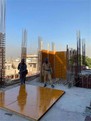
• Concrete formwork for buildings, bridges, and foundations
• Scaffolding platforms and temporary flooring
• Industrial packaging, truck floors, and containers
• Outdoor construction partitions and reusable site structures
• Infrastructure and commercial construction projects
⸻
Technical Specifications
Below are common technical parameters for green film faced plywood:
• Standard Size: 1220 × 2440 mm (custom sizes available)
• Thickness: 12mm / 15mm / 18mm
• Film Type: Green phenolic film (120–220 g/m²)
• Core Material: Poplar, eucalyptus, birch, or mixed hardwood
• Glue: WBP phenolic or melamine (MR optional for light-duty use)
• Reusability: 8–15 cycles depending on usage conditions
⸻
Why Green Film Faced Plywood Is Cost-Effective
Although the initial price of green film faced plywood may be higher than ordinary plywood, its long service life and multiple reuses make it far more economical over time.
By reducing replacement frequency, labor costs, and material waste, it helps contractors control budgets while maintaining high construction standards. Additionally, eco-friendly plywood supports sustainability targets required by many international projects.
⸻
How to Choose a Reliable Green Film Faced Plywood Supplier
When sourcing green film faced plywood, consider the following factors:
• Verify FSC or PEFC certification for responsible wood sourcing
• Request product samples and technical data sheets
• Confirm glue type and water resistance standards (WBP is recommended)
• Ask about reuse performance and quality control procedures
• Choose suppliers with strong export experience and proven construction clients
⸻
Conclusion
Green film faced plywood is a reliable, durable, and environmentally responsible choice for modern construction projects. Its waterproof surface, strong core structure, and excellent reusability make it ideal for concrete formwork and structural applications.