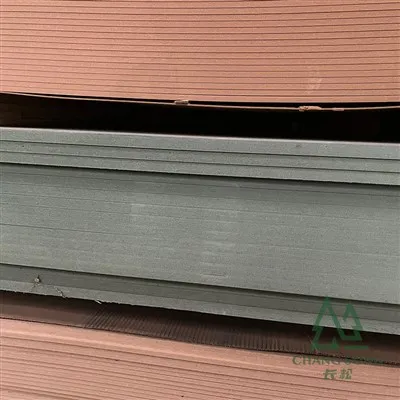
Plywood is a three-layer or multi-layer plate material made by peeling wood segments into veneers or planing wood blocks into thin wood, and then gluing them with adhesives. It usually uses an odd number of veneers, and the fiber directions of adjacent veneers are glued perpendicular to each other.
Plywood is one of the commonly used materials for furniture, one of the three major artificial boards, and can also be used as materials for aircraft, ships, trains, cars, buildings, and packaging boxes. A group of veneers is usually assembled and glued in a perpendicular direction to the grain of adjacent layers. Usually, the surface board and the inner layer are symmetrically arranged on both sides of the center layer or the core. The slabs are made by staggering the veneers coated with glue in the direction of the wood grain, and are pressed under heating or non-heating conditions. The number of layers is generally odd, and a few have even numbers. The physical and mechanical properties in the longitudinal and transverse directions are slightly different. Commonly used types of plywood include three-ply board and five-ply board. Plywood can improve the utilization rate of wood and is a major way to save wood.
The usual length and width specifications are: 1220×2440mm, and the thickness specifications are generally: 3, 5, 9, 12, 15, 18mm, etc. The main tree species are: beech, camphor, willow, poplar, eucalyptus, etc.

In order to improve the anisotropic properties of natural wood as much as possible, and make the plywood properties uniform and stable in shape, plywood generally follows two basic principles in structure: one is symmetry; the other is that the fibers of adjacent layers of veneers are perpendicular to each other. The principle of symmetry requires that the veneers on both sides of the symmetric center plane of the plywood should be symmetrical to each other regardless of the wood properties, veneer thickness, number of layers, fiber direction, moisture content, etc. In the same plywood, veneers of a single tree species and thickness can be used, or veneers of different tree species and thicknesses can be used; but the tree species and thickness of any two layers of symmetric veneers on both sides of the symmetric center plane must be the same. The face and back panels are not allowed to be of the same tree species.
In order for the structure of plywood to meet the above two basic principles at the same time, its number of layers should be an odd number. Therefore, plywood is usually made into three, five, seven layers, and other odd numbers of layers. The names of the layers of plywood are: the surface veneer is called the surface board, the inner veneer is called the core board; the front surface board is called the top board, and the back surface board is called the back board; in the core board, the fiber direction is parallel to the surface board is called the long core board or the middle board. When forming the cavity table board blank, the top board and the back board must face outward.