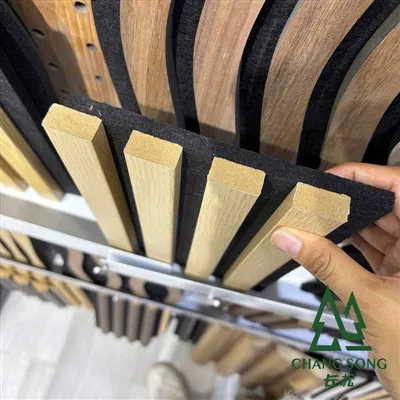
Hey there! As a supplier of Sapeli Faced Plywood, I often get asked about its density. So, let's dive right into it and figure out what the density of Sapeli Faced Plywood actually is.
First off, let's understand what density means in the context of plywood. Density is basically how much mass is packed into a certain volume. In simpler terms, it tells us how heavy the plywood is for its size. When it comes to Sapeli Faced Plywood, the density can vary depending on a few factors.
One of the main factors that affect the density of Sapeli Faced Plywood is the type of core material used. The core can be made from different woods, like poplar, pine, or even a combination of woods. Each of these core materials has its own density, which in turn affects the overall density of the plywood. For example, if the core is made from a denser wood, the overall density of the Sapeli Faced Plywood will be higher.
Another factor that plays a role in the density is the thickness of the plywood. Thicker plywood generally has a higher density because there's more material packed into the same area. So, if you're comparing two pieces of Sapeli Faced Plywood, the thicker one is likely to be denser.
The manufacturing process also has an impact on the density. During the production of plywood, the layers are glued together under pressure. The amount of pressure applied and the quality of the glue can affect how tightly the layers are bonded, which in turn affects the density. If the layers are tightly bonded, the plywood will be denser.


Now, let's talk about the typical density range of Sapeli Faced Plywood. On average, the density of Sapeli Faced Plywood can range from about 0.5 to 0.8 grams per cubic centimeter (g/cm³). However, this is just a general range, and the actual density can be higher or lower depending on the factors we discussed earlier.
A lower density Sapeli Faced Plywood (around 0.5 g/cm³) is lighter and may be more suitable for applications where weight is a concern, like in some types of furniture or interior decorations. On the other hand, a higher density plywood (closer to 0.8 g/cm³) is heavier and more durable. It's often used in applications where strength and stability are important, such as in construction or for making cabinets that need to hold a lot of weight.
When it comes to the benefits of different densities, a lower density plywood is easier to handle and work with. It's also usually less expensive. But it may not be as strong or resistant to wear and tear as a higher density plywood. Higher density plywood, as mentioned earlier, is more durable and can withstand more stress. It's also less likely to warp or bend over time.
If you're in the market for plywood and considering Sapeli Faced Plywood, it's important to know the density that suits your needs. You might also want to check out some other types of plywood we offer. For instance, we have Ev Poplar Faced Plywood, which has its own unique characteristics. It's known for its smooth surface and good workability, and its density can also vary depending on the core and manufacturing process.
Another option is Natural Red Oak Faced Plywood 4x8. Red oak is a popular choice for its beautiful grain and durability. The density of this plywood can also be different from Sapeli Faced Plywood, and it might be a great option for projects where you want a more natural and rustic look.
And if you're into furniture making, our Melamine Laminated Plywood For Furniture could be just what you need. It has a laminated surface that's easy to clean and maintain, and its density is also an important factor to consider depending on the type of furniture you're making.
So, how do you determine the density of the Sapeli Faced Plywood you're interested in? Well, one way is to ask the supplier (that's me!). I can provide you with the specific density information for the plywood we have in stock. You can also measure it yourself if you have the right tools. To do this, you'll need to measure the mass of a sample of the plywood using a scale and the volume by measuring its length, width, and thickness. Then, you can calculate the density by dividing the mass by the volume.
In conclusion, the density of Sapeli Faced Plywood can vary based on the core material, thickness, and manufacturing process. Knowing the density is important because it can help you choose the right plywood for your project. Whether you need a lighter, more affordable option or a heavier, more durable one, there's a Sapeli Faced Plywood out there for you.
If you're interested in purchasing Sapeli Faced Plywood or any of our other plywood products, I'd love to have a chat with you. We can discuss your specific requirements, the density you need, and any other questions you might have. Just reach out, and we can start the procurement process. I'm here to make sure you get the best plywood for your project.
References
- Wood Handbook: Wood as an Engineering Material, Forest Products Laboratory
So, don't hesitate to contact me if you're looking for high - quality plywood. Let's work together to make your project a success!